
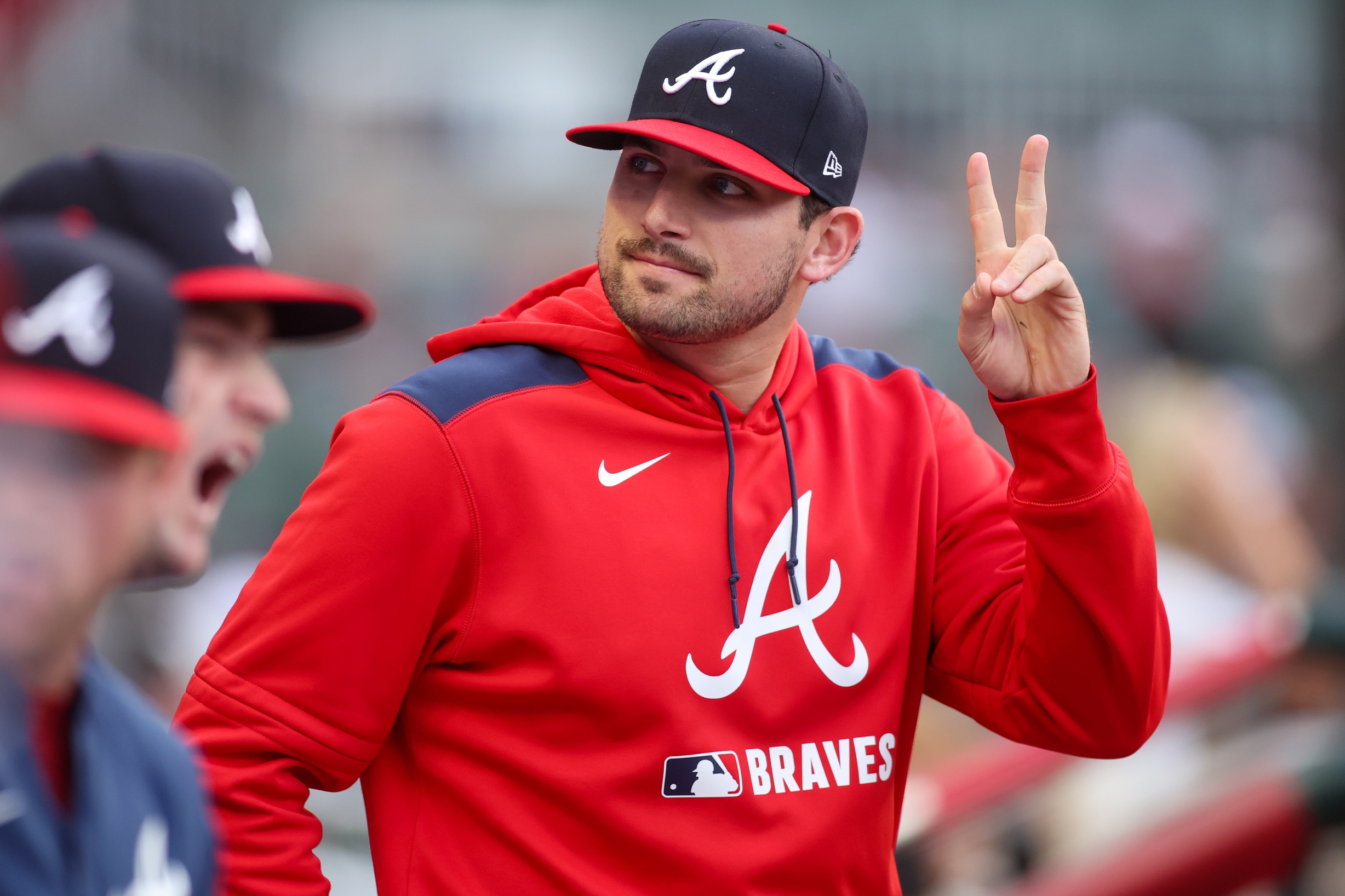
The Atlanta Braves have embraced the language of modern offense: flexibility, matchups, adaptability. On paper, it sounds like a blueprint built for October. In practice, however, the way their lineup may stack up against left-handed starters hints at something far more fragile, a construction that quietly funnels immense responsibility onto one bat: Austin Riley.
A Modern Braves Look With an Old-School Risk

If Atlanta continues to deploy back-to-back left-handed hitters near the top of the order against lefties, the early innings begin to take on a predictable rhythm. Left-on-left matchups can slow the pace of damage. Even when quality hitters grind out at-bats, the contact profile often shifts. The margin for immediate impact narrows.
That subtle slowdown matters. It allows opposing starters to establish secondary pitches, find rhythm, and potentially cruise into the heart of the order with fewer stress pitches than expected. A first inning that should feel volatile can instead feel procedural. A rally window that should stretch wide can quietly shrink.
Stacking left-handed bats against a left-handed starter may reflect confidence in talent over splits. But it also invites the opposing manager to attack aggressively early, knowing the platoon edge tilts his way. If those at-bats result in softer contact or routine outs, the lineup’s leverage transfers quickly and decisively to the next right-handed threat.
Riley Becomes the Hinge
When the top third of the lineup is even marginally contained by a capable left-hander, the burden doesn’t disperse evenly. It concentrates. Riley becomes the hinge point, the first true right-handed power presence likely to see traffic and high-leverage plate appearances. He becomes the moment of decision for the opposing dugout. Is he pitched to? Is he navigating carefully? Is the inning allowed to turn on one swing?
This wouldn’t register as a concern if Riley were coming off a season of uninterrupted dominance. But the Braves are not merely asking him to produce; they are structuring the lineup in a way that may require him to repeatedly rescue momentum. That is a heavier assignment. It means being the first line of defense if the inning stalls. It means converting early baserunners into crooked numbers. It means ensuring that a modern, left-leaning alignment does not morph into a predictable vulnerability.
The psychological element cannot be ignored either. When the lineup’s architecture subtly signals that the breakthrough likely rests on one bat, opposing pitchers adjust accordingly. Riley could see fewer mistakes, tighter sequencing, and more deliberate pitch plans in the biggest spots.
Ceiling vs. Dependency
The upside remains undeniable. Riley possesses rare power capable of neutralizing even elite left-handed pitching. Few hitters can erase a pitcher’s best offering and flip an inning in one violent swing the way he can. His ceiling is engineered for high-stakes at-bats.
But ceiling and consistency are separate conversations. The Braves’ construction against left-handed starters risks turning Riley from a middle-of-the-order force into a structural necessity. There is a difference between benefiting from his power and depending on it.
If Atlanta continues clustering left-handed bats up top, the offense may experience stretches where it feels tethered to Riley’s ability to punish mistakes immediately. The flexibility the Braves advertise could more closely resemble a wager, one that assumes Riley consistently wins the pivotal matchups that define the first third of the game.
The strategy may be modern. The analytics may support it. But when the inning tightens and leverage spikes, it will not be theory determining the outcome; it will be Austin Riley.