The Atlanta Braves do not have to look very far to identify their biggest need ahead of the trade deadline. While there are legitimate questions throughout the roster and several areas that could benefit from reinforcements, recent developments have made one priority stand above the rest. If Atlanta is serious about making a postseason run and positioning itself for another World Series push, starting pitching must sit at the top of the deadline agenda.
The warning signs were there before Opening Day. The Braves entered the season without making a significant rotation addition, instead relying on internal options and hoping health would cooperate. That gamble has become increasingly difficult to justify as the season has unfolded.
Braves Rotation Problem Has Become Impossible to Ignore
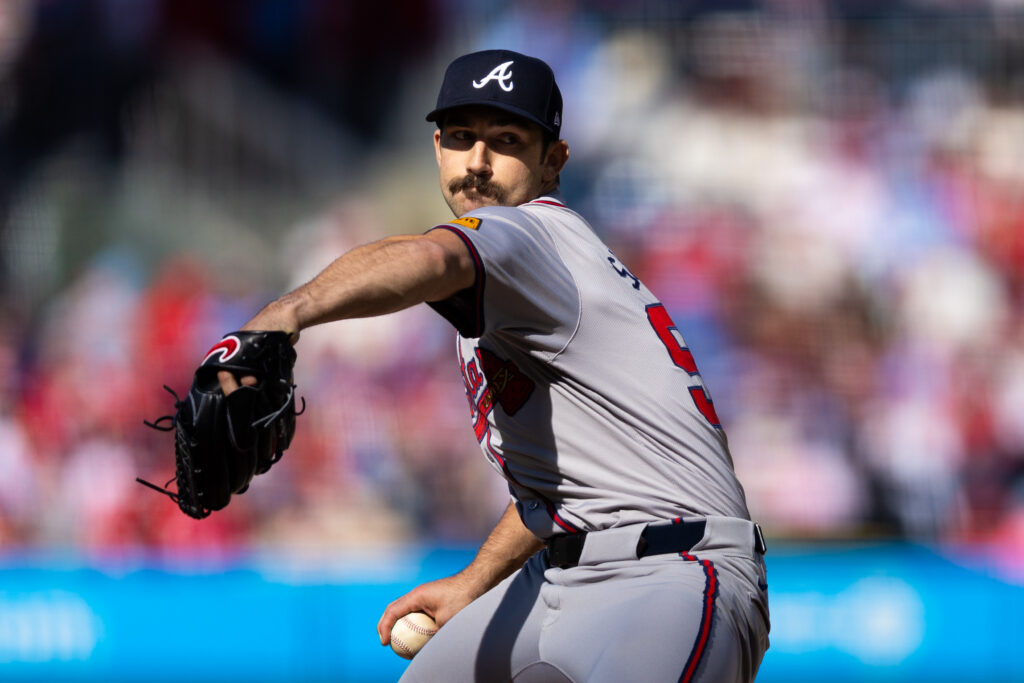
Spencer Strider’s latest injury only magnifies the problem. His move to the 60-day injured list guarantees he will be sidelined until at least the middle of August, and even then, there are no guarantees regarding his effectiveness or durability. Losing a pitcher of Strider’s caliber would challenge any contender, but for Atlanta, it exposes a rotation that already lacked depth.
Chris Sale has been the steady force atop the staff. Bryce Elder has provided valuable innings and continues to earn opportunities. Beyond those two, certainty becomes much harder to find. Grant Holmes has shown flashes but has struggled with consistency. Prospects such as JR Ritchie may have bright futures, but expecting them to carry meaningful innings during a playoff race is asking a great deal.
The result has been additional pressure on the bullpen. Relievers have repeatedly been asked to cover extra innings because too few starters are consistently working deep into games. Martin Perez has been forced to move between roles to help address the shortage. A reliable starter capable of delivering six or seven innings every fifth day would not only strengthen the rotation but would also improve the bullpen by reducing its workload.
Questions surrounding Hurston Waldrep’s eventual return and uncertainty regarding Spencer Schwellenbach only reinforce the concern. Atlanta simply cannot afford to assume that internal solutions will arrive and solve the problem immediately.
Braves October Success Starts on the Mound
The concern extends beyond the regular season. Trade deadline acquisitions are judged by what they do in October, and postseason success is built on starting pitching. A playoff series demands multiple trustworthy arms capable of handling high-pressure starts. At the moment, Chris Sale is the only Braves starter who inspires complete confidence in that role.
Bryce Elder may earn a postseason opportunity, and Strider would likely be part of the equation if he returns healthy. Still, relying on possibilities rather than proven answers is a dangerous approach for a team with championship aspirations.
Finding a pitcher capable of delivering quality playoff starts is far easier said than done. Every year, dominant regular-season arms struggle once the postseason begins. That reality does not change the Braves’ responsibility to pursue help. If Atlanta can add another starter capable of handling October pressure, it could dramatically change the outlook of a potential playoff run.
The goal should be to create depth rather than depend on unexpected heroics. Let the next surprise postseason performer be a luxury instead of a necessity.
Other Needs Exist, But They Come Second
That is not to say Atlanta lacks other needs. Questions remain in the outfield as Ronald Acuña Jr. and Michael Harris II continue to deal with health concerns. Mike Yastrzemski has not consistently delivered the production many hoped for, while Eli White has settled into a complementary role.
Shortstop remains another area worth monitoring as Ha-Seong Kim works through struggles and Atlanta evaluates how long Mauricio Dubón and Jorge Mateo can sustain their current production. An additional bat would undoubtedly help strengthen the lineup.
However, the offense has generally found ways to remain competitive, and the bench has delivered useful contributions throughout the season. There is still time to evaluate those positions and determine whether upgrades become necessary.
The rotation is operating under a different timeline. Atlanta has already experienced how quickly injuries can derail a season when pitching depth evaporates. The Braves finished last year on a stronger note when they finally regained some stability in the rotation. This season, the standard should be higher than merely surviving.
If the Braves want to maximize their championship window, the front office’s priority is clear. Add a starter. If possible, add two. Everything else can follow from there. The path to October success begins with strengthening the rotation, and the need has never been more obvious.