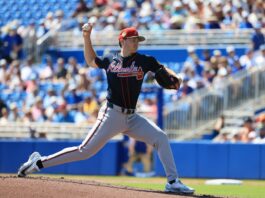
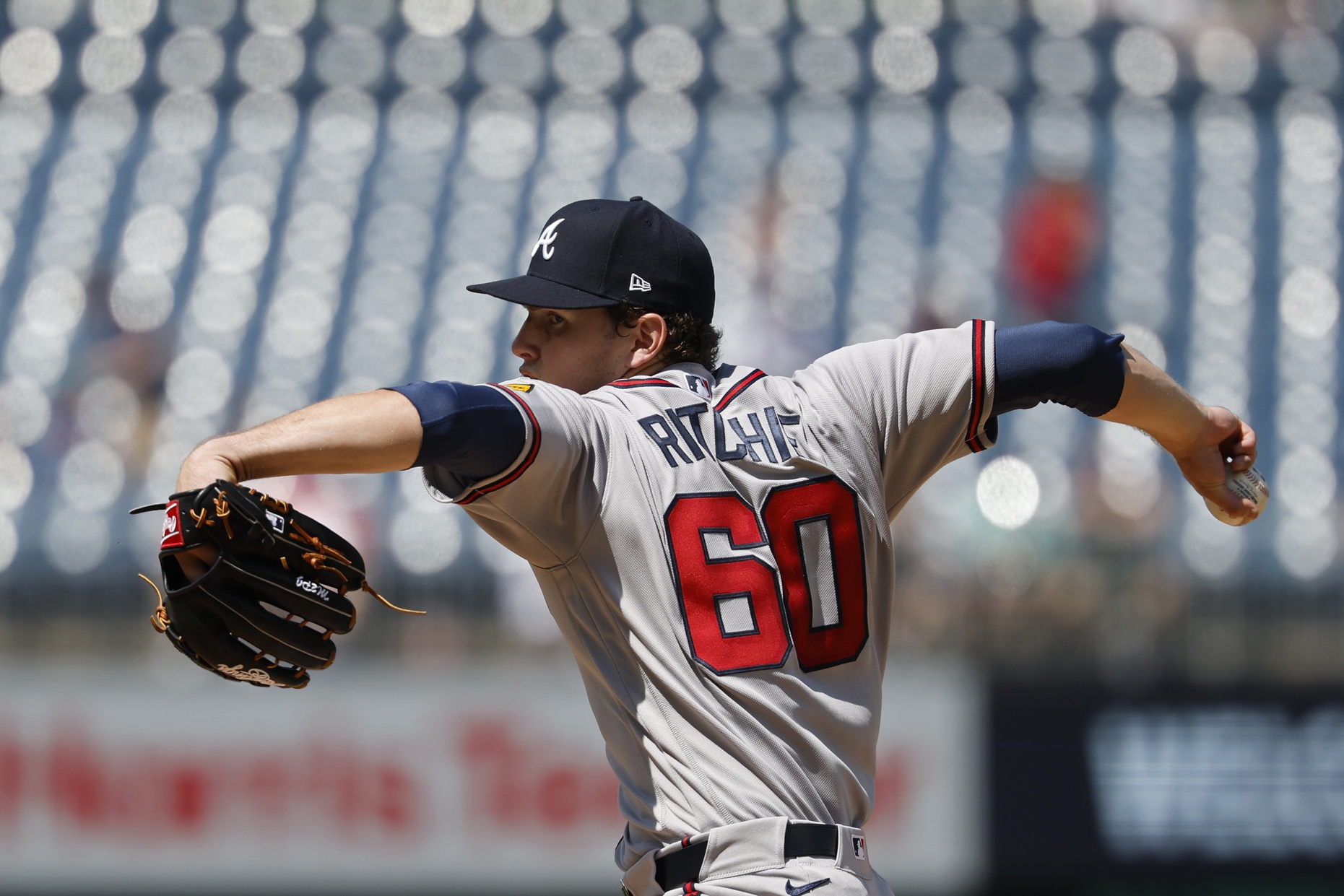
JR Ritchie’s first Braves impression in the majors lasted exactly one pitch before reality hit him. James Wood turned that opening offering into a home run, a loud introduction to the level Ritchie had just reached. For a moment, it looked like the afternoon might spiral. Instead, it became a controlled, measured response that revealed far more about the young right-hander than the mistake that started it.
A Braves Debut That Recovered Fast and Held Firm
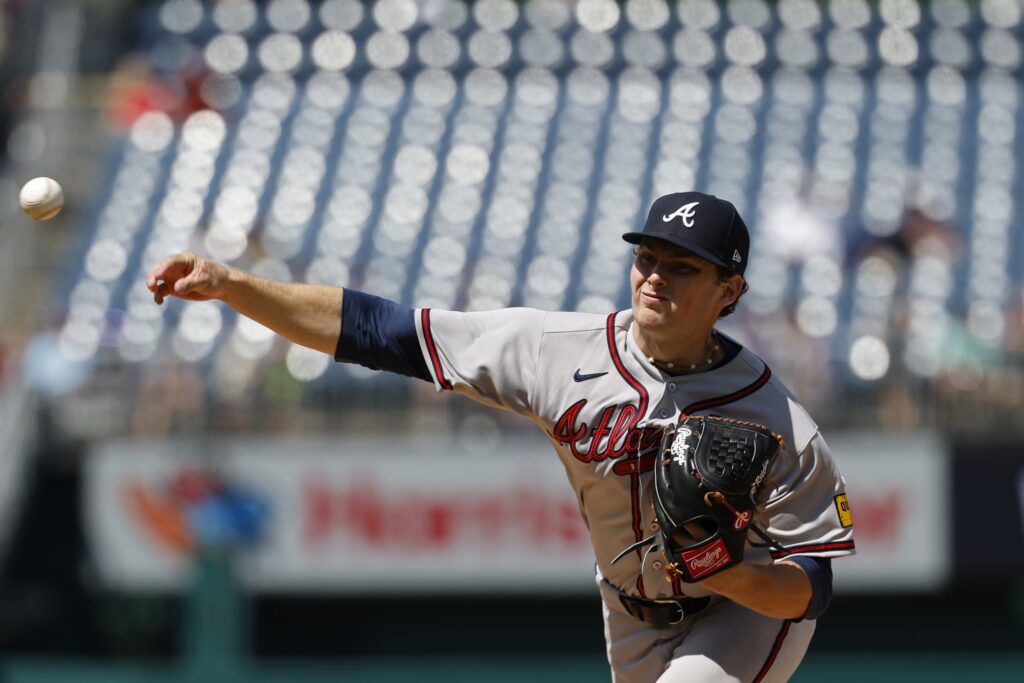
Ritchie reset quickly. He worked through seven innings, allowing just two runs on five hits, issuing two walks, and striking out seven. The line itself stands out, but the context matters more. He didn’t nibble or shrink after the early damage. He attacked the zone, mixed his pitches, and maintained composure against a major league lineup seeing him for the first time. That combination doesn’t show up in a box score, but it defined the outing.
The performance also placed him in unique company in Braves history. No pitcher in the franchise had previously debuted with at least seven innings pitched, no more than two runs allowed, and seven or more strikeouts. That is a narrow statistical lane, but it reflects both durability and effectiveness, two qualities Atlanta has been trying to stabilize in its pitching staff.
MLB Roster Math Complicates a Clear-Cut Case
That creates an immediate tension between performance and roster structure. The Braves don’t just need quality starts; they need coverage. Raisel Iglesias remains sidelined with a sore shoulder, thinning a bullpen that already requires careful management. Carrying a six-man rotation under those conditions limits flexibility in late innings, and that tradeoff can show up quickly over a long stretch of games.
Spencer Strider’s anticipated return complicates things further. His spot in the rotation is not in question, and Atlanta has shown a willingness to stick with Martin Perez, whose results have been steady enough to justify continued starts. That leaves Ritchie in a position where merit alone may not secure his place.
Why Triple-A Might Be a Temporary Stop
Sending him back to Triple-A Gwinnett would not reflect a lack of confidence. It would reflect the practical need to balance innings, roles, and availability within a pitching staff trying to maintain pace throughout an MLB season. Ritchie can continue building workload as a starter there, rather than shifting into irregular bullpen usage at the major league level.
The reaction to a potential demotion will be predictable. A debut like that invites immediate expectations. But the organization’s actions suggest something more measured: they see value in keeping him stretched out, ready, and close. If the rotation needs reinforcement again, and over the course of a season, it almost certainly will, Ritchie has already shown he can step in without hesitation.
One outing doesn’t define a career, but it can establish a baseline. Ritchie’s baseline now includes poise under pressure, the ability to recover mid-game, and the stamina to carry a start deep into the later innings. Whether he remains in Atlanta or returns briefly to Gwinnett, that standard travels with him.