

The Atlanta Braves have wasted no time setting the tone in 2026, opening the season with a 21–9 record and quickly separating themselves from much of the league. A fast start like that doesn’t just build confidence inside the clubhouse; it shifts the front office’s posture. Teams in this position don’t think about patience; they think about October. That shift is exactly why Atlanta is already being pulled into early trade speculation, with one name drawing attention: George Springer.
Early Braves Trade Buzz Picks Up Steam
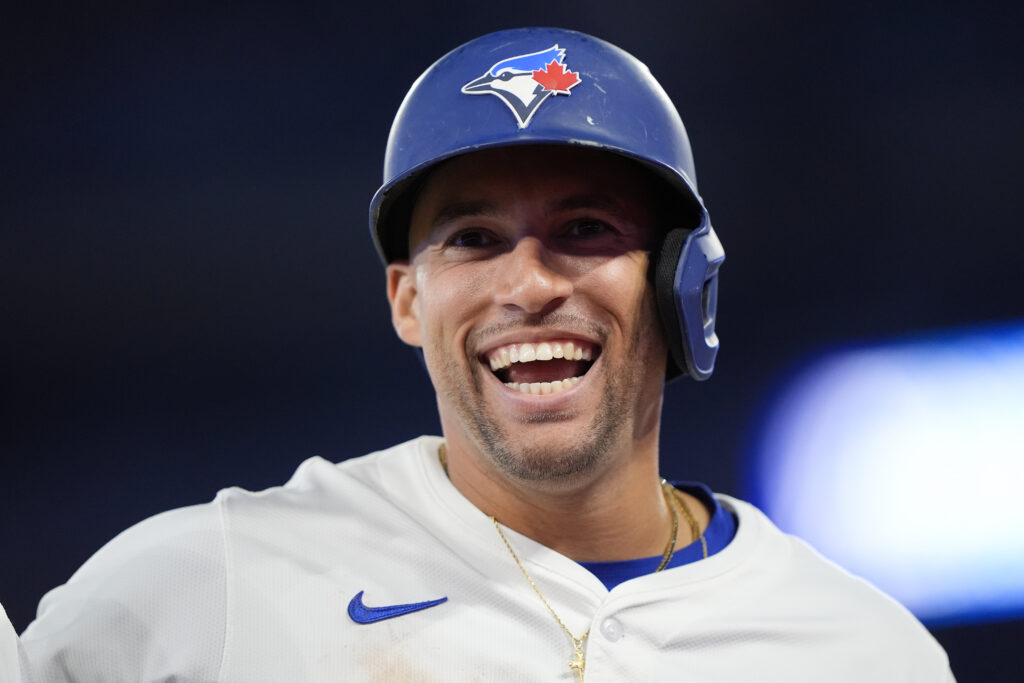
The proposed scenario, floated in a mock deal, sends Springer from Toronto to Atlanta in exchange for pitching prospect Owen Murphy and outfield prospect Luis Guanipa. On paper, it checks a few obvious boxes. The Braves would add a veteran outfielder with postseason experience, while the Blue Jays would receive controllable young talent, particularly pitching, which always carries value.
But the details complicate things quickly. Springer, now in the final year of his six-year, $150 million contract, represents more than just a rental bat. Even with a slow start, batting .185 with limited production over 14 games, his track record remains difficult to dismiss. His résumé includes playoff success and a steady presence in high-pressure moments, traits that don’t come easily.
Toronto’s Position Remains Firm
There’s also the timing. Springer was just activated off the injured list, though he hasn’t yet returned to the lineup. That alone makes any immediate trade discussion unlikely. Teams rarely move players when their value is uncertain or potentially suppressed. Toronto would likely prefer to let Springer settle back in before weighing any offers.
From the Blue Jays’ perspective, the reasoning is straightforward. If Atlanta sees Springer as a piece for a postseason run, Toronto can make the same case internally. Unless their season shifts in a clear direction, there’s little incentive to move a veteran with a defined role.
Atlanta’s Win-Now Mindset Drives Speculation
From Atlanta’s side, the logic is easier to follow. A team with the best record in baseball can justify moving prospects, even highly regarded ones like Murphy, if the return strengthens the major league roster for a postseason push. Springer wouldn’t be expected to carry the lineup; he would add depth, rotate through the outfield, and provide another option at designated hitter.
Still, the question isn’t whether Atlanta would consider it; it’s whether Toronto would engage at all. Right now, that answer leans no. The same factors that make Springer appealing to the Braves are the ones that keep him in Toronto. What this scenario really highlights is how often Atlanta’s name will surface as the trade deadline approaches, especially if this pace continues.