The 2026 season for the Atlanta Braves included a short chapter featuring catcher Jonah Heim. On February 10, 2026, the organization executed a big league contract with him to assume catching responsibilities during Sean Murphy’s recovery from late-season surgery in 2025. According to Battery Power, the organization expected Heim to serve as the primary backup to rookie Drake Baldwin during this injury period. This move was meant to be a simple bridge, but the outcome turned into a complex story of decline and a quick exit.
Before his tenure with the club concluded, Heim appeared as the catcher in 12 games for Atlanta. His final game with the Braves occurred on May 3, where he hit a home run and a double against the Rockies. That performance was his best as a Brave, yet it happened just before he was designated for assignment. According to Battery Power, a cash trade to the West Sacramento Athletics followed, placing the Braves in a precarious spot when Murphy rejoined the injured list a week later.
Why the Braves Signed Heim
The decision to bring Heim to Atlanta was driven by immediate necessity rather than long-term plans. With surgery preventing Sean Murphy from playing at the start of the 2026 regular season, the squad required a catcher. Battery Power notes that Heim had lingered on the free agent market, which made him an available option for a short-term role. The expectation was clear: he was to be the backup to Drake Baldwin, the reigning Rookie of the Year winner.
Heim arrived with a resume that included an All-Star selection and a Gold Glove award in 2023. During four straight years, he served as a dependable starter for the Texas Rangers, appearing in at least 124 games each season. However, his recent performance had dropped significantly before he signed with the Braves. His production had cratered in 2024 and 2025, with his fWAR marks falling to 0.0 and -0.4 respectively after a career-high 4.0 in 2023.
The decline was not limited to one area of his game. His hitting numbers fell from a 103 wRC+ in 2022 and 2023 to a 71 wRC+ in the following two years. Battery Power states that his defense, once considered his greatest strength, fell into “truly abysmal” territory during this same period. Despite these red flags, projection systems still viewed him as a below-average regular who could at least play catcher well enough to fill a gap.
Performance During His Time in Atlanta
Heim’s time on the field for the Braves was limited to 45 plate appearances over 12 starts. He posted a slash line of .231/.311/.410, which looked slightly better than his recent track record. However, Battery Power explains that this result was largely due to him outhitting his expected weighted on-base average (xwOBA) in such a small sample size. His actual xwOBA of .277 as a Brave was nearly identical to the .279 he recorded in 2024 and 2025.
Defensive metrics continued to rate him poorly, showing no sign of recovery from the struggles he faced after 2023. Filling the gap created by Murphy, he saw intermittent starting action during the initial six weeks of the year. While he had his best game on May 3 against the Rockies, the window for his usefulness was closing fast. The moment Murphy was activated, the Braves moved quickly to part ways with Heim.
The trade happened shortly after that May 3 game, sending Heim to the West Sacramento Athletics for cash. Battery Power describes this move as awkward for the Braves because Murphy suffered another lengthy injury stint just one week later. The team found itself in a desperate situation with catcher options that were even worse than Heim, leading to a scenario reminiscent of the 2021 disaster involving Kevan Smith and other temporary fill-ins.
What Happened After the Trade
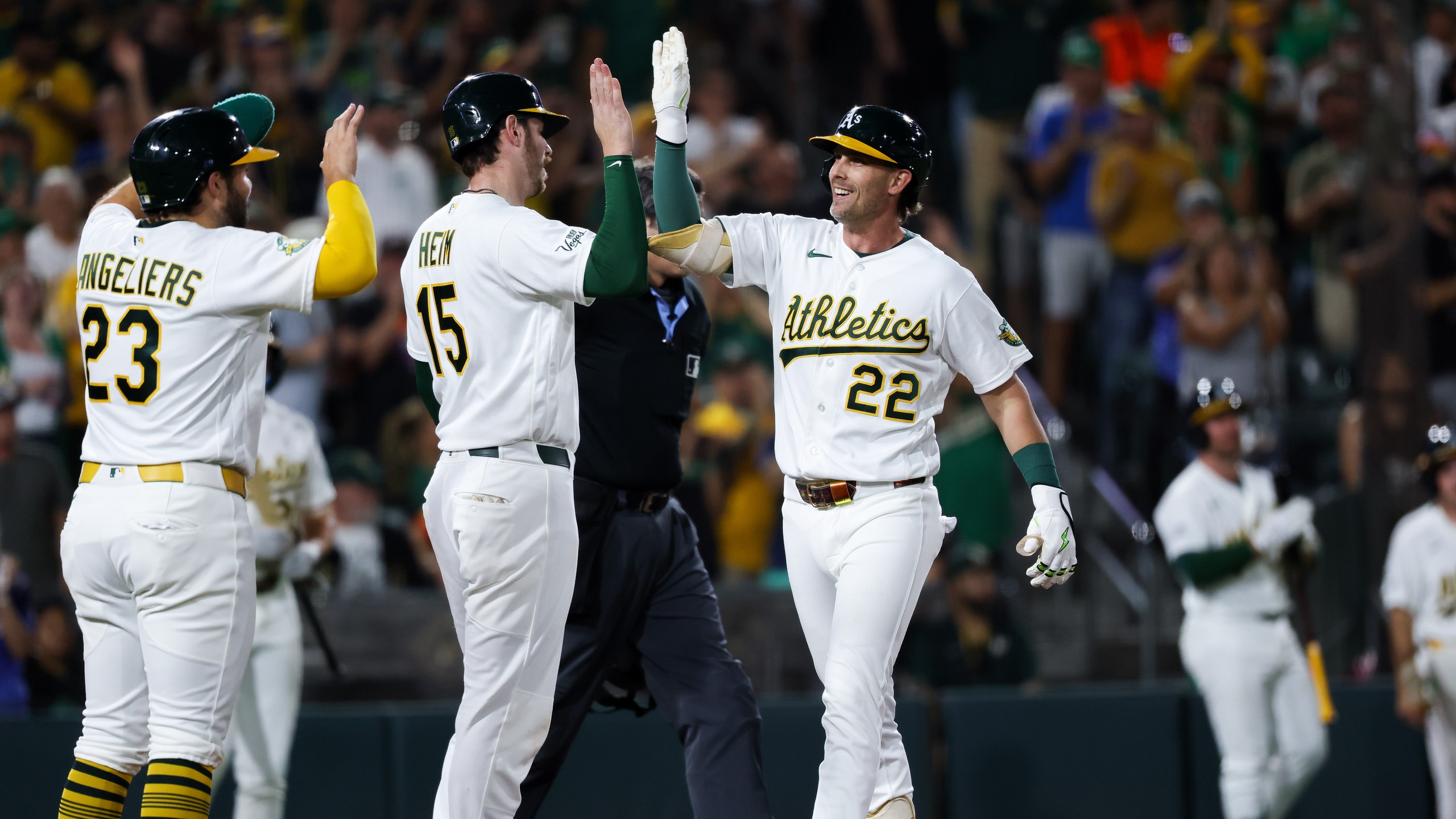
Once Heim arrived in West Sacramento, he became a semi-regular player for the Athletics. He logged 345 plate appearances in 93 games, a significant increase in playing time compared to his brief stint in Atlanta. Despite the increased role, he finished the season with a -0.6 fWAR, which marked a new career low for the veteran catcher. Battery Power attributes this poor result to his continued and worsening inability to play the catcher position effectively.
His offensive production was a tale of two halves. Through the end of June, Heim was hitting fairly well for his new team with a 105 wRC+. However, he fell apart down the stretch, dropping to a 44 wRC+ from July onward. This decline brought his final season average down to a 66 wRC+.
The way Heim reached his new role was painful for both sides. He was actually hitting well before his late-season collapse, which made his overall season stats look worse than they might have been. Battery Power points out that the Braves missed the early version of Heim, even if the math of the season did not reflect that sentiment. The trade ultimately moved a player who was struggling to find stability to a team where he got more chances to play.
Defensive Struggles That Defined His Year
The most consistent issue for Heim throughout 2026 was his defense. After winning a Gold Glove in 2023, his defensive metrics fell into truly abysmal territory. Battery Power emphasizes that after his All-Star campaign, he experienced absolutely no recovery from the low points he began to reach. This trend continued in Atlanta and followed him to the Athletics, where he still struggled to play the position well.
Projection systems before the season had hoped he could still play catcher fairly well, balancing a below-average bat. The reality was that his defensive skills had deteriorated significantly. The Braves signed him hoping he could hold down the fort, but the metrics suggested he was a liability behind the plate. This defensive decline was a major factor in why his tenure in Atlanta was so short.
Even when he was hitting better, the defensive issues remained a constant problem. The 2026 season served as a stark contrast to his 2023 success, showing how quickly a player’s value can drop when defense fails. Battery Power notes that his inability to play the catcher position well was a key reason for his new career low in fWAR. This defensive drop-off made it difficult for any team to keep him in a starting role.
The Context of His Previous Seasons
To understand the 2026 season, one must look at the years leading up to it. Heim had been a consistent starter for the Texas Rangers, playing in over 124 games for four straight years. His 2022 season saw a 2.7 fWAR, and he reached a career-high of 4.0 in 2023. However, the 2024 and 2025 campaigns saw his production crater, with fWAR marks of 0.0 and -0.4. Battery Power emphasizes that this decline was across the board, affecting both his hitting and defense.
The hitting decline was particularly sharp. This drop in offensive production made him a risky free agent. The Braves took a chance on him hoping for a bounce-back, but the underlying metrics suggested he was still the same player who had struggled recently. The signing was a gamble that did not pay off in the long run.
His status as a former All-Star and Gold Glove winner made him an attractive name on the free agent market, but the recent stats told a different story. Battery Power reports that he lingered on the market because teams were wary of his decline. The Braves needed a body behind the plate, and Heim was available, but the fit was not ideal for a long-term solution.
Impact on the Braves’ Catcher Depth
The departure of Heim left the Braves in a precarious position when Sean Murphy returned from injury. Murphy’s activation triggered Heim’s trade, but Murphy’s return to the injured list a week later created a crisis. Battery Power describes the situation as dire, with the team forced to rely on options that were worse than Heim. The catcher situation began to look like the 2021 disaster involving Kevan Smith and other temporary fill-ins.
Drake Baldwin, the rookie who Heim was supposed to back up, also hit the shelf during this period. This double injury to the catching corps forced the Braves to make difficult decisions. They had traded away their only reliable backup too soon, leaving them with no good options. The timing of the trade proved to be unfortunate for the team’s depth chart.
Battery Power suggests that the team did not miss his aggregate production but did miss his contribution during that specific window. The trade highlighted the risks of moving a player who might still have some value in a short-term role.
Comparison to Other Braves Players
While Heim’s story was one of decline, other players on the 2026 roster had different experiences. Connor Thomas, for instance, struggled with the Braves before finding success with the Kansas City Royals. Regarding his final performance as a Brave, Battery Power observes that Thomas drew pity from a rival broadcast. His time with the Braves was disastrous, giving up four runs in his first appearance and four homers in his second.
Thomas finished the season with a 2.33 ERA for the Royals, showing that he could pitch effectively in a different environment. This contrasts with Heim, who struggled to find consistency even after being traded. Both players had brief and difficult stints in Atlanta, but their outcomes diverged significantly once they left the organization.
The 2026 season was marked by several unlucky moments for Braves hitters as well. Battery Power lists multiple instances where balls hit hard ended up in the hands of opposing fielders. These moments included fly outs for Ronald Acuña Jr. and line outs for Michael Harris II. While these players had better seasons than Heim, the bad luck they encountered added to the frustration of the year.