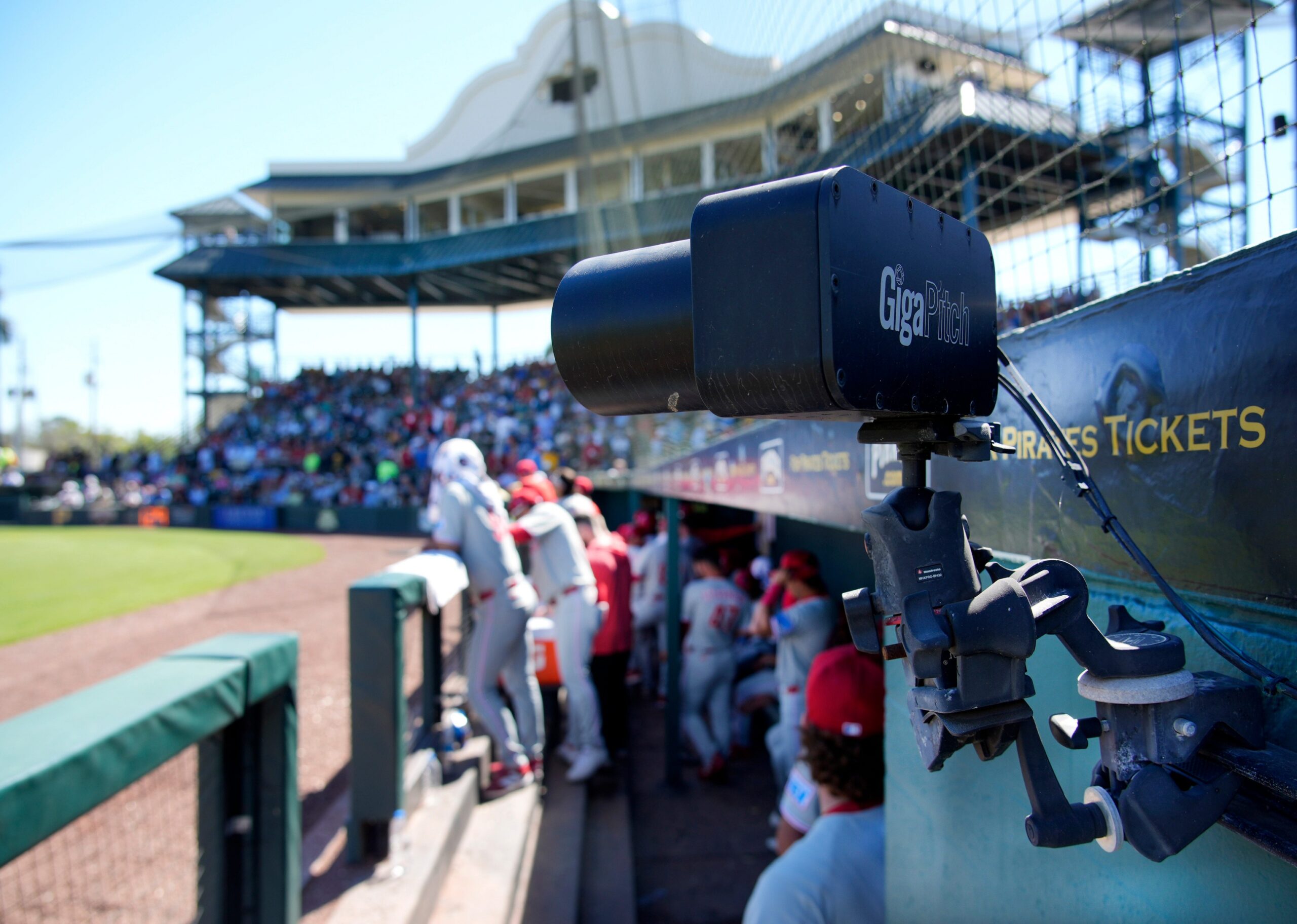
The first week of Major League Baseball’s ABS challenge system has already delivered something the sport rarely manufactures on demand: tension that feels immediate, visible, and shared between players, managers, and fans. It is not just about getting calls right anymore; it is about when and how those calls are questioned, and what unfolds in the seconds that follow.
ABS Leads To Sudden Surge of In-Game Drama

The most noticeable shift is the injection of drama into otherwise routine moments. A borderline pitch in March now carries a different kind of weight. When Cincinnati’s Eugenio Suarez successfully challenged back-to-back calls, the reaction inside the ballpark was not polite approval; it was a surge. The crowd responded as if something decisive had just happened, even though the inning was still unfolding. That reaction matters because baseball has long sought ways to increase engagement without altering its core structure. Here, the game pauses briefly, a decision is scrutinized, and then confirmed or overturned with finality. It is quick, but it lands.
Umpires Under a Brighter, Harsher Light
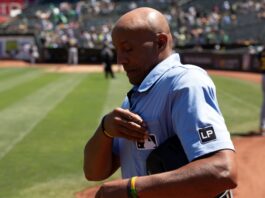
That same mechanism introduces friction in less appealing ways. Umpires, already under constant review from broadcast strike zones and postgame breakdowns, now face direct and immediate contradiction in front of everyone. When a challenge overturns a call, it is no longer a quiet correction; it is a public reversal. Early reactions suggest that pressure is building quickly. CB Bucknor’s difficult outing and Aaron Boone’s visible frustration toward Mike Estabrook show how quickly these moments can escalate. The system does not just correct calls; it exposes them.
A Split Between Human Judgment and Technology
From a competitive standpoint, the appeal is obvious. Players want consistency, and the ABS system provides a measurable standard that reduces some of the variability associated with individual umpires. The memory of missed calls in high-stakes games still lingers, and this system gives teams a direct mechanism to respond in real time.
But the system’s partial nature raises a more complex issue. Because only challenged pitches are reviewed through ABS, two strike zones effectively exist within the same game: the umpire’s judgment and the system’s definition. That split can lead to uneven outcomes. A pitch that goes unchallenged remains subjective, while another, nearly identical pitch might be overturned moments later. The inconsistency is not eliminated; it is redistributed.
That tension points to the larger question hovering over this early rollout. If the technology is reliable enough to correct calls, why limit it to a challenge system at all? The current model preserves human involvement while introducing technological oversight, but it stops short of full integration. For now, that compromise is producing both clarity and contradiction, often within the same inning.