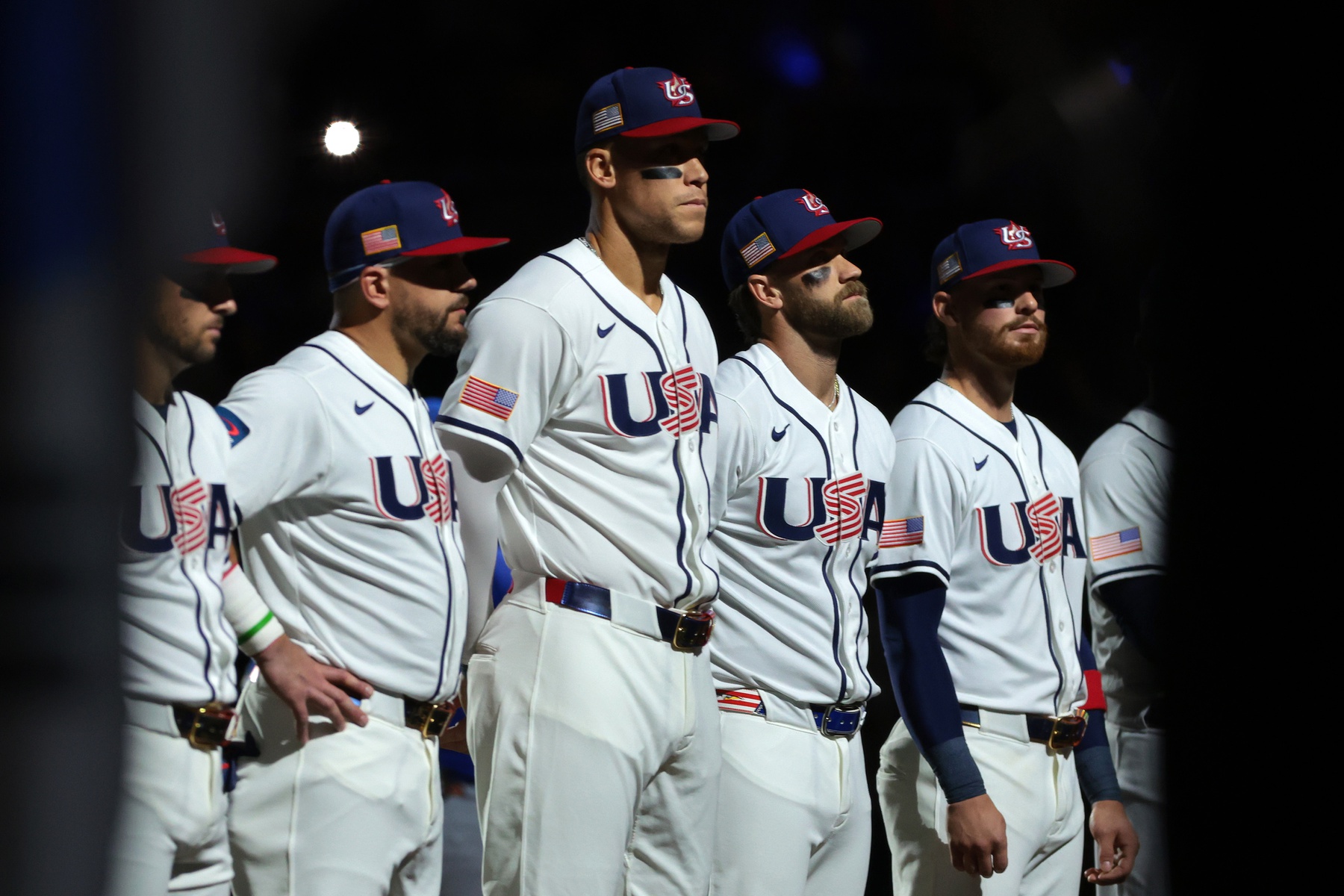
The atmosphere inside Miami’s loanDepot Park was already electric before a single pitch was thrown, but what unfolded during the pre-game ceremony quickly turned that energy into something far more tense. As the Star-Spangled Banner echoed across the stadium ahead of the World Baseball Classic final, fans watched closely, and many did not like what they saw. A noticeable number of Team USA players stood silent, staring ahead, offering little outward emotion as the anthem played. In sharp contrast, Venezuela’s lineup stood unified, visibly engaged, and passionately singing every word of their own national anthem.
A Stark Contrast Before First Pitch
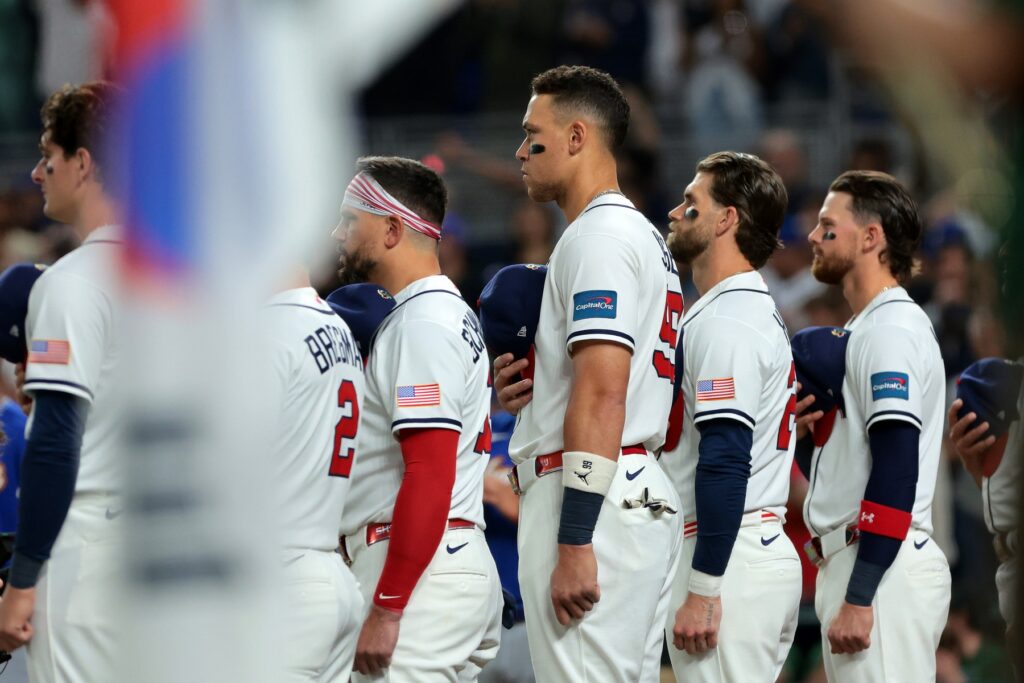
That visual divide struck a nerve almost instantly. For many American supporters, the moment carried symbolic weight beyond baseball, and the reaction was swift and unforgiving. Social media platforms lit up with criticism, with fans openly questioning their team’s commitment and pride. Some singled out high-profile stars like Aaron Judge and Paul Skenes, suggesting that the lack of visible enthusiasm reflected a deeper issue that would soon be mirrored in their on-field performance.
As the game began, the United States stumbled early and struggled to find rhythm. Through seven innings, they managed just two hits and fell into a 2-0 deficit, looking out of sync against a determined Venezuelan side. The early innings painted a picture of hesitation and missed opportunities, reinforcing the growing frustration among fans already unsettled by the pre-game optics.
A Flicker of Hope Quickly Extinguished
Yet just when momentum appeared lost, Bryce Harper delivered a dramatic eighth-inning home run to tie the game at 2-2, briefly reigniting hope among the home crowd. For a moment, it seemed as though the narrative might shift, that the United States would recover and assert its dominance when it mattered most. The energy in the stadium surged, and the tension reached its peak.
That hope, however, proved fleeting. In the ninth inning, Venezuela capitalized on a critical opportunity. After Javier Sanoja reached base and advanced into scoring position, Eugenio Suárez delivered a decisive hit to left field, allowing Sanoja to score the go-ahead run. The Venezuelan dugout erupted, sensing history within reach.
A Night to Forget for Team USA
Moments later, as Team USA’s Roman Anthony struck out to end the game, that eruption turned into a full celebration. Venezuela had secured a stunning 3-2 victory and its first-ever WBC title. For the United States, the loss was more than just a missed championship. It was a night marked by unmet expectations, both emotionally and competitively. A roster filled with elite talent failed to deliver when it mattered most, and scrutiny quickly followed, with Judge’s three strikeouts symbolizing a broader collapse under pressure.
Meanwhile, for Venezuela, the triumph carried profound national significance. Starting pitcher Eduardo Rodríguez, overcome with emotion, described the victory as everything to his country. In a city with the largest Venezuelan population in the United States, the win resonated deeply, transforming the ballpark into a scene of national pride and celebration. The contrast that began with the anthems ultimately extended through the final out, a powerful reflection of unity, momentum, and a historic shift on baseball’s international stage.