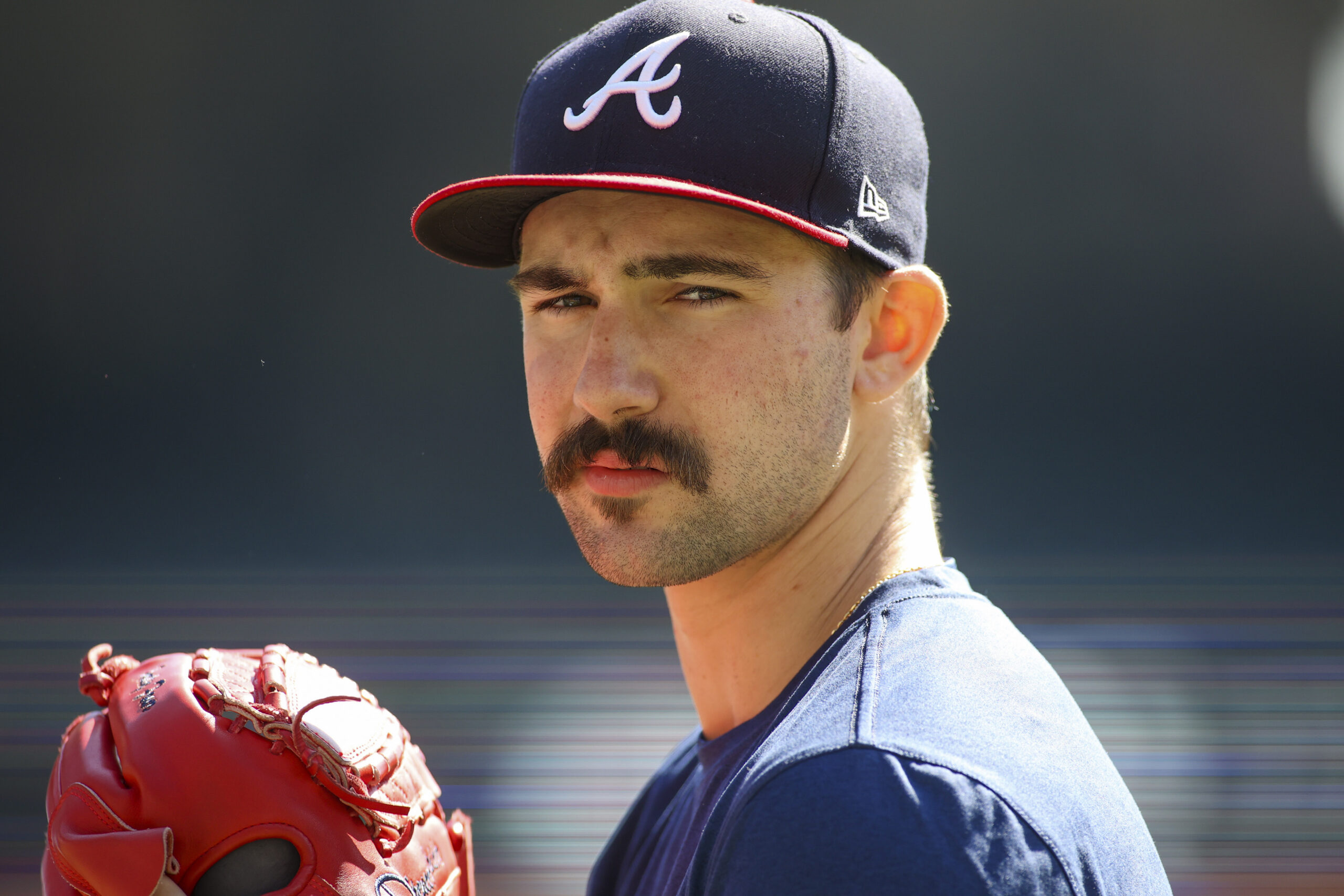
The timing lines up almost too neatly. After a month spent watching from the sidelines, Spencer Strider is set to step back onto a major league mound Sunday, closing out a series at Coors Field, not exactly a gentle reintroduction. Braves manager Walt Weiss confirmed the move just hours before Atlanta walked off Detroit, adding a jolt of anticipation to a team that has managed to thrive without one of its most electric arms.
Strider’s Braves Return Comes With Measured Expectations
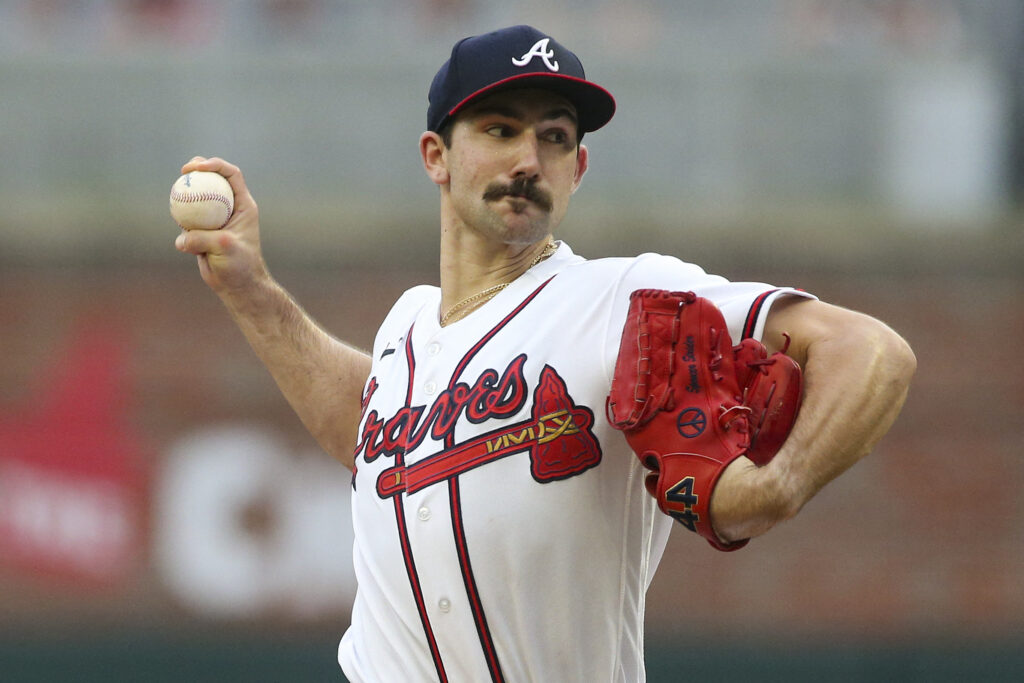
Strider’s absence traces back to an oblique strain in Spring Training, a setback that delayed his 2026 debut but didn’t derail his buildup. Over three rehab starts at Triple-A Gwinnett, he stretched out to five innings and 82 pitches, showing enough sharpness to quiet most concerns. The radar gun tells a measured story: a 95.5 mph average fastball paired with an 84 mph slider. It’s not the upper-90s velocity that defined his pre-surgery peak, but it mirrors where he sat last season, suggesting a return built more on stability than spectacle.
A Rotation That Refused to Break
What makes this return more intriguing is the context he’s stepping into. Atlanta’s rotation hasn’t just survived a wave of injuries; it has produced. Bryce Elder has locked down his role with consistent outings, while Grant Holmes and Martín Pérez have navigated contact-heavy approaches into effective results. Rookie appearances from Didier Fuentes and JR Ritchie have filled gaps without collapsing the structure. Even Reynaldo López, a rotation piece by design, now appears ticketed for bullpen duty to accommodate the shifting puzzle.
Ritchie, in particular, has complicated the picture. His debut against Washington, seven innings, two runs, forced attention, and his follow-up against Detroit showed enough resilience to earn another turn. That next outing, set for Seattle, carries a personal angle for the Pacific Northwest native, but it also underscores how many viable options Atlanta currently holds.
Roster Crunch Incoming as Reinforcements Near
Strider’s return doesn’t just add talent; it forces decisions. Pérez could slide into relief work. López’s role adjusts. The Braves, rarely a team to lean heavily on matchup tinkering, may have to get flexible, at least temporarily.
And Strider isn’t arriving alone. Raisel Iglesias is nearing activation without a rehab assignment, Sean Murphy’s return window is closing fast, and Ha-Seong Kim has already begun his own ramp-up. The roster that carried Atlanta through April is about to be reshaped, piece by piece.
Sunday won’t just mark Strider’s season debut. It will mark the start of a roster recalibration that the Braves have, until now, been able to delay.